Showing posts with label vampires. Show all posts

Sunday, September 20, 2015

Welcome to Otherworld


Welcome to Otherworld! I hope you’ll join me on my journey into this mystical realm.

I’m fascinated by the ancient Celtic idea of an ‘otherworld’ that is situated, not in some distant, unknown region of planetary space, but here on our own earth just out of sight and within our grasp…if we really believe in it and want it enough. 

Frequently, in faerie-lore, Otherworld was a subterranean world entered through caverns, hills, or mountains, and inhabited by many races and orders of beings, such as demons, shades, faeries, and gods. This magical world was divided into districts or kingdoms each with its own ruler, just like the world of mortals. 

Sometimes, the Celtic Otherworld was located in the middle of the Western Ocean, as though it were the 'double' of the lost Atlantis. Faerie women came from that mid-Atlantic world in magic boats like spirit boats, to charm away mortal men, or else to take King Arthur when he was wounded unto death. And on that island world there was neither death, nor pain nor suffering. Instead there was only immortal and unfading youth, endless joy and feasting.

Alternatively, at rare intervals, like a phantom, Otherworld appears far out on the Atlantic. As late as the summer of 1908 it is said to have been seen from West Ireland. Or a strange invisible island, inhabited by invisible, faerie gentry, is seen once every seven years near Innishmurray. 

I believe the truth is simpler and yet more complex. Otherworld exists everywhere. It is right here, alongside our mortal realm, just out of sight but easily within reach. All we need is a belief in its existence and a desire to go there.

The Otherworld in my forthcoming series for Harlequin Nocturne is a beautiful place inhabited by many races, including faeries, vampires, lycanthropes, phantoms and gods. Unfortunately, the constant battles between these warring dynasties threaten to spill over into the mortal realm.

I'd love to know what you think! Do you believe in Otherworld? Let me know:

Sunday, September 13, 2015

Wolf shifter versus Puma shifter - when shifters go to war #PNR #99cents

Humans. Yeah, they've had their moments. They've started and ended many different wars, all over the world, for all kinds of reasons. Like humans, but unlike their animal brethren, shifters fight wars, too.

Whether it's a vampire vs. shifter war like in Twilight Breaking Dawn


Which also had a vampire vs. vampire battle as well.... 

Or an ongoing long-standing battle for supremacy between the bloodsuckers and the wolves such as in Underworld:


It's pretty clear that the shifters have their own battles to fight. But what about shifter vs. shifter battles? Those are more rare, but I don't see why they can't happen. After all, some shifters were once human, they can't have lost their impulse toward war entirely. Only the Vulcans have done that!

So in my Sexy to Go Volume 6 story, I am heading Liam and Dahlia's tribe right into a war. The bad part is, it's Liam's wolf shifters against Dahlia's puma shifters. Yes, the age-old war of cat vs. dog continues! How perfect is that? But, like any war, it's going to tear everyone apart.


Unburied Hatchet by Eva Lefoy
The pack’s move is delayed by a double childbirth. Afterward, Casi experiences her first shift, but on return home, discovers a brutal attack on the pack will separate her from everyone she loves.

Excerpt:

Snake called to the driver. “Stop the car. We’re getting out.”
The bears grumbled in the front seat, turning and arguing that they stay together, but Conri and Snake leapt out, telling the bears to keep the doors locked and her and the baby inside. At the first sign of trouble they were to take off, even if they hadn’t yet returned.
They ran ahead, shifting as they went. Seeing Conri and Snake in wolf form, side by side, their powerful muscles bulging with every stride, she longed to join them but didn’t. Inside, she sensed something was wrong. Something terrible. She shuddered and bit her lip, sensing her good life had suddenly gone to hell.
Even the bears in the front seat had gone grim and silent, shutting down the radio and looking at each other – and her – with concern. When they pulled up to the compound entrance and stopped, all hell broke loose.
Liam sped past their vehicle, also in wolf form. She turned and looked back, spying Dahlia and her baby sitting alone in the backseat in the Escalade. Casi moved toward the door but a large bear hand stopped her.
“No. Stay here.”
Without the benefit of a mind link, all she could do was flash Dahlia a sad look. She wanted to be with her, but the bears weren’t going to allow it. Why? What was going on?
Casi, Dahlia’s voice said in her head, don’t you smell it?
Smell what?
Death. The village has been attacked while we were gone.
Casi’s mouth hung open, the shock and the strong scent of blood hitting her all at once. Yes, she could smell it and the stench of it soured her stomach like nothing ever had before. 


Will this war have a happy ending? Eventually. But for now, it's going to be nothing but hardship for Casi and newborn as they are left alone - with the bear shifters as guards - while the battle rages, proving once again war is never a good experience for anyone.

Get this and 10 other hot romance stories in Sexy to Go volume 6 for $.99 at all e-book outlets.

Amazon: http://t.co/1PUdrj4AKc

Sunday, March 22, 2015

The Children of the Night

'Listen to them, the children of the night. What music they make.' Dracula by Bram Stoker (first published 1897)  

Let me start this post by saying that, just because I haven't included vampires in my books (yet) I have nothing against them. I like reading vampire novels. But I like my vampires as legend intended them. I want them to scare me. I want them to be proud, beautiful monsters. 
If you like your vampires sparkly, that's fine. Good luck to you. I prefer mine bloody. Each to her own. 
For me, Lestat, central character of The Vampire Chronicles by Anne Rice, is the consummate vampire in his beauty and the way he revels in his unashamed monstrosity. Kurt Barlow, in Stephen King's Salem's Lot, is my ultimate horror novel vampire. When it comes to romance, I have a weakness for Jean-Claude, Master Vampire in the Anita Blake books by Laurell K. Hamilton. 
But my first vampire love is with the great Count Dracula himself. And I also have an enduring fascination with Bram Stoker, the Irishman whose imagination conjured up such an iconic character.

Dublin

My interest in Abraham Stoker (known to his family as Bram), began about 15 years ago when I was in Dublin. I visited a quaint, little church close to the banks of the River Liffey called St. Michan's. St Michan's looks unimpressive from the outside, but, in its vaults, there are mummified bodies.
One of these is an 800 year old mummy called 'the crusader'. When you visit St Michan's, you can go into the crypt and shake hands with the crusader. Well, you could 15 years ago. Things may have changed since! 
On the day I was there, the guide showing me around said that Bram Stoker had lived nearby and visited St Michan's regularly. Who knew, he speculated, whether the crusader might have been the inspiration for Count Dracula? 

Whitby 

I started this year by fulfilling a Dracula related ambition when I spent new year in Whitby. Whitby, a fishing port on the North Yorkshire coast, is the place where, in Stoker's novel, the Russian ship, the Demeter runs aground during a fierce storm. All of the crew are missing, presumed dead, with the exception of the captain's body which has been lashed to the ship's helm. As the ship runs aground an animal resembling a large wolf or dog is seen leaping ashore from it's deck. The ill-fated ship's only cargo is described as silver sand and boxes of mould or earth from Transylvania.
Whitby did not disappoint. 
It is an incredibly beautiful, atmospheric town. I can see why, having stayed there, Stoker chose to set so many scenes from his book in Whitby. He would have drunk in, as I did, the view through the Whalebone Arch across the harbour to the cobbled streets, dominated by the imposing ruins of Whitby Abbey which sits brooding atop the winding 199 steps rising up the cliffs from the narrow streets below. It is easy to see how this prospect would have inspired his macabre and creative imagination. 

My own imagination was fired by Whitby. As I made my way along the tiny, cobbled lanes and looked up at the imposing outline of the Abbey, I could imagine that Dracula and his descendants were still around. I was inspired to think about creating my own beautiful monster.

Watch this space...

Sunday, March 15, 2015

What Is Paranormal?


What do you consider paranormal? One free online dictionary defines paranormal as: Something very strange and not able to be explained by what scientists know about nature and the world. Another definition is: Not scientifically explainable or supernatural.

When we think about it, things we deem paranormal are pretty much anything that isn’t what the majority of humans would consider “normal”. If that’s the case, why do so many of us "normal people" love to read stories and watch T.V. or movies about something so strange?


Is it because our minds are constantly in some weird state of flux? Are we constantly and\or subconsciously working on the problems that are unique to the characters who interest us?


Maybe it has something to do with the characters’ sometimes over-the-top supernatural powers or do we just enjoy reading about people who can do all the things we would secretly like to be able to do ourselves? 


I tend to think that perhaps, it’s just that we enjoy reading stories about people who are just a little more screwed up than we are.


Over the years I’ve seen vampires and werewolves, zombies and aliens, to name a few. Each of these paranormal entities have cycled through our books and T.V. shows not to mention the big screen. After their few hours of fame, we fickle readers and viewers move along to another sub genre, almost tirelessly searching for something new, better or possibly even stranger than the last.

The best way I have ever seen the word paranormal described was in a dictionary I read long ago. It defined paranormal as: Anything other than normal. If that’s the case, my dear readers, welcome to the dark side because normal is overrated.


To see more from this author please visit www.tiannaxander.com, Twitter.com @TiannaXander, www.tiannaxander.blogspot.com, and  https://www.facebook.com/TiannaXander

Thursday, February 26, 2015

Vampire Hunters in Film and Television

My Favorite Vampire Hunters in Film and Television

~Margo Bond Collins


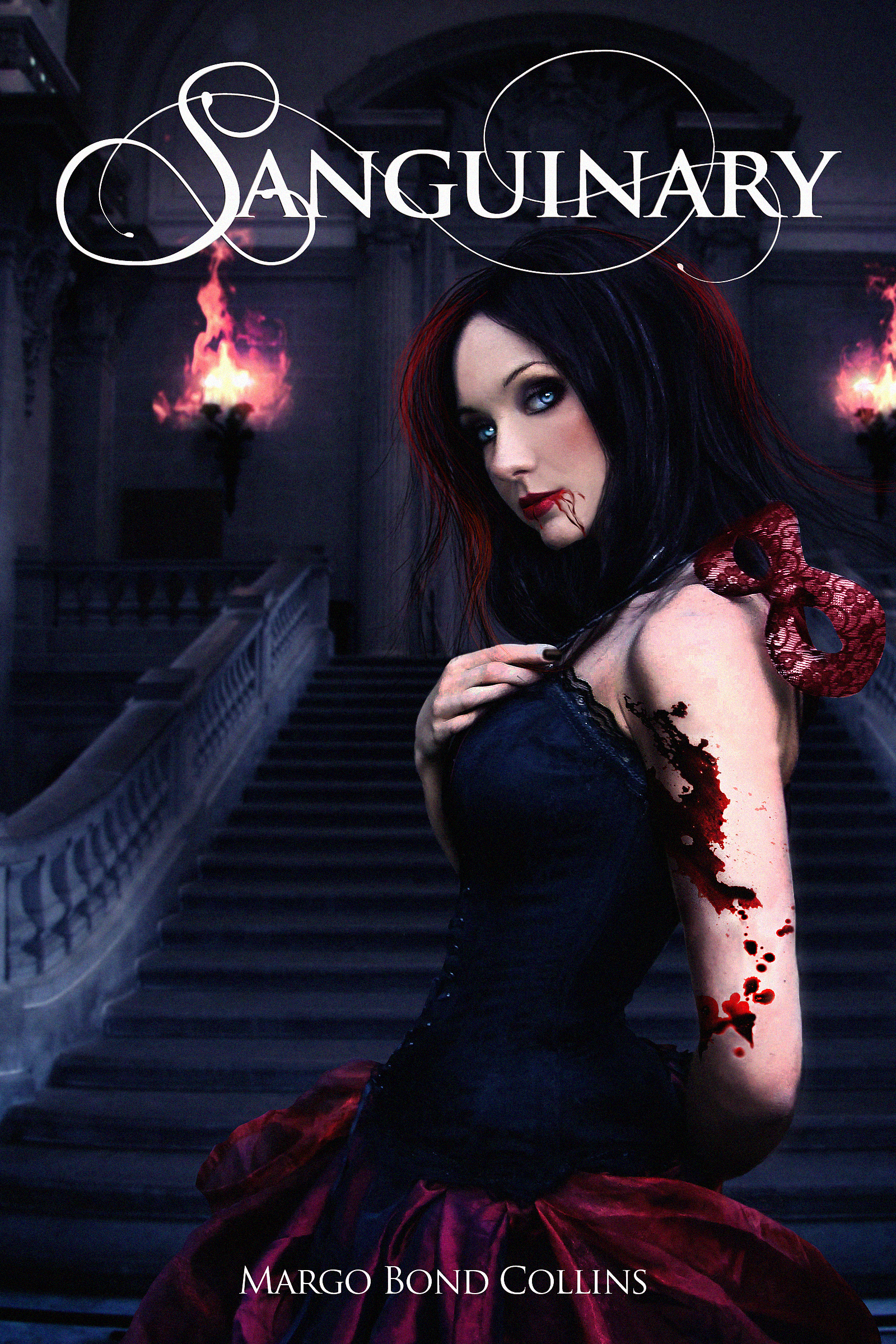
In my novel Sanguinary, Cami Davis is a detective on the Dallas police force, and part of an anti-vampire squad. My depiction of her is absolutely influenced by my love of vampire hunters in film and television. Here's a list of some of my favorite vampire hunters:


Buffy: Because what’s not to love about a snarky blonde cheerleader with a destiny to be a vampire slayer? Add Joss Whedon’s particular brand of brilliance, and Buffy is still one of my favorite vampire hunters, even more than fifteen years after the television series first aired.


The Winchester Brothers:  Normally, these are top five lists. But I’m going to count Sam and Dean Winchester from the television series Supernatural together—it’s virtually impossible to consider them any other way. Technically, Sam and Dean are monster hunters in general, and vampires make up only a small percentage of their hunts—but since Dean was once briefly turned into a vampire and Sam had to contemplate beheading his brother, I think it counts. Plus: they’re just so beautiful.


Peter Vincent: I know that the 2011 remake of Fright Night was not exactly a favorite of either critics or fans. But I love, love, love David Tennant in the role of the stage magician whose dark past makes him a vampire expert.


Blade, Whistler, and Abigail Whistler (I'm counting these guys together, too!): I love the way the Blade film series uses the conventions of vampire film and myth. The dhampir (or half-vampire) as a vampire hunter is one of my favorite semi-obscure vampire myths, and Wesley Snipes does a nice job of being a taciturn, tortured hero in the dhampir role. Film scholar Jeffrey Weinstock has claimed that the vampire film is always about technology, and Whistler (Kris Kristofferson) is the consummate tech guy. Finally, the addition of Abigail Whistler brings the kick-ass heroine into the series, making it just about perfect, as far as I’m concerned.


Pike: In the original film version of Buffy the Vampire Slayer, she ends up with Pike, a mechanic whose best friend is turned into a vampire. I like Pike because, like Elle in my book Legally Undead, he doesn’t want to kill vampires. In fact, he packs up to get out of town. But then he sticks around to help Buffy figure out that she is, as he says, “the guy. The chosen guy.”


I really wanted to find a film or TV version of Van Helsing to include in this list, but I just couldn’t. The movie Van Helsing was simply laughable, and the Van Helsing character in the various Dracula movies doesn’t seem strong enough. I’d love to hear about any Van Helsings or other vampire hunters I might have missed who should be considered!


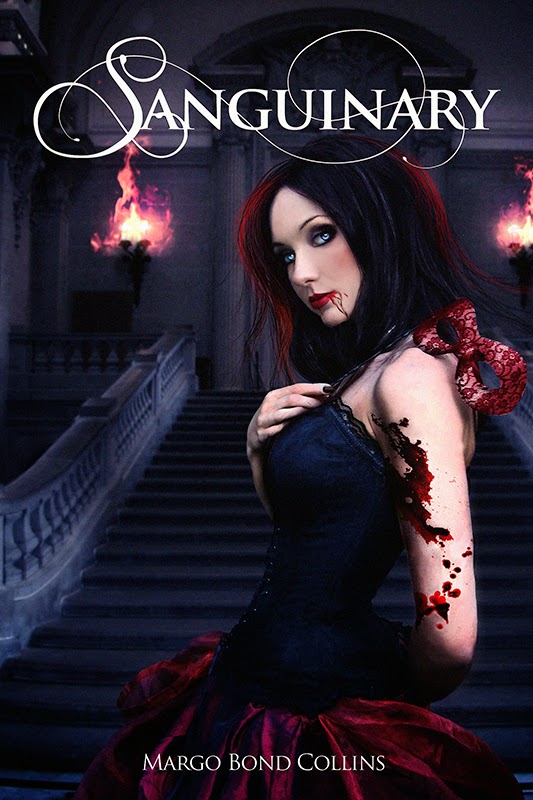
_____________________________________________ sanguinary final
A Night Shift Novel

Only fifty years left before vampires rule the world.

When Dallas police detective Cami Davis joined the city's vampire unit, she planned to use the job as a stepping-stone to a better position in the department.

But she didn't know then what she knows now: there's a silent war raging between humans and vampires, and the vampires are winning.

So with the help of a disaffected vampire and an ex-cop addict, Cami is going undercover, determined to solve a series of recent murders, discover a way to overthrow the local Sanguinary government, and, in the process, help win the war for the human race.

But can she maintain her own humanity in the process? Or will Cami find herself, along with the rest of the world, pulled under a darkness she cannot oppose?

_____________________________________________

Buy Links

Kindle: http://www.amazon.com/Sanguinary-Night-Shift-Book-1-ebook/dp/B00MR5VGV8/


Paperback: http://www.amazon.com/Sanguinary-Night-Shift-Novel-1/dp/0990743322/

  _____________________________________________


MargoBondCollinsAbout the Author Margo Bond Collins is the author of urban fantasy, contemporary romance, and paranormal mysteries. She has published a number of novels, including Sanguinary, Taming the Country Star, Legally Undead, Waking Up Dead, and Fairy, Texas. She lives in Texas with her husband, their daughter, and several spoiled pets. Although writing fiction is her first love, she also teaches college-level English courses online. She enjoys reading romance and paranormal fiction of any genre and spends most of her free time daydreaming about heroes, monsters, cowboys, and villains, and the strong women who love them—and sometimes fight them. _____________________________________________


Connect with Margo
Amazon Author Page: https://www.amazon.com/author/margobondcollins
Email: MargoBondCollins@gmail.com
Website: http://www.MargoBondCollins.net
Blog: http://www.MargoBondCollins.com
Twitter: https://twitter.com/MargoBondCollin @MargoBondCollin
Google+: https://plus.google.com/116484555448104519902
Goodreads Author Page: http://www.goodreads.com/vampirarchy
Facebook Author Page: https://www.facebook.com/MargoBondCollins
Pinterest: http://www.pinterest.com/mbondcollins/

_____________________________________________

sanguinarymeme1

Friday, February 13, 2015

Can't You See Him As Your Next Vampire Lover?


When I look it him, not only do I see Captain America's hot best friend but also, if I let my imagination soar, an emotionally tortured Count.  

A vampire choosing to live his life alone, away from the threat of humanity and its blasted companionship fraught with complication.  How can you be friends with your food?  Sure there are other vampires but they tend to be rivals who stir up trouble.  No, this man, this Count leads an uncomplicated life not sullied by messy things like emotions and relationships. 

That is until his leading lady steps into his life.  Perhaps it is you.  You stir a long dormant desire within him. With you, he sees the possibility of happiness and a life of pleasure, not loneliness.

But who do you see?  A hot as hell man with the strength of ten and a pent up passion longing to be released.


He is determined to claim you.  You will be his mate forever.  And you want this.  For he is fearless, handsome and determined man.  He is the consummate alpha male and he wants you. You know his devotion for you will be without limit but then again so will your love.  

He is a vampire and yet you are willing to offer up yourself to spend an eternity with him for he has captured your heart and your body. He will protect you even if it means sacrificing his life because you are his mate, his love, his bride.

...So when I saw The Winter Soldier, my muse became very inspired.  


-Peyton Brittany Clarke

She is presently writing way too many paranormals to speak of while tweaking her follow ups to her debut paranormal romance 'Blood Bond-The Ferae.'

peytonbrittanyclarkewrites.blogspot,com


Thursday, February 12, 2015

Kick-Ass Heroines and Monstrosity

One of the things that I’ve always loved about the use of the term “kick-ass” to describe urban fantasy and paranormal romance heroines is that it indicates approval of heroines’ tendency to move from more traditionally feminine roles into behaviors more usually associated with the male heroes of action movies and literature; these women have power and carry weapons, and they aren’t afraid to use them.


But the shift of heroines’ roles in urban fantasy and paranormal romance from passive recipient of romantic love to active participants in violence and killing also carries a certain amount of anxiety in our culture. L. Jagi Lamplighter notes that “today’s audiences have welcomed this golden age of butt-kicking heroines with great relish,” but also claims that these heroines face a “fundamental conflict between modern culture and drama”:


Culture demanded a heroine who is fierce, powerful, and spunky, who lives in a world without taboos where she can do exactly as she pleases. But the needs of drama, the laws that govern what makes a story romantic, require something else entirely: a superior male who lives in a world where taboos separate the heroine from the object of her desire.


Thus, according to Lamplighter, urban fantasy requires a supernatural male love interest—one who is inherently superior to the heroine simply due to his supernatural nature. This is significant, Lamplighter claims,


Because violence is masculine. The more violent the hero, and the more he is ravaged by desires he cannot control—the desire for blood, the uncontrollable compulsion to turn into a wolf under the full moon—the more excuse for the hero to allow his passions to run away with him, and the greater the heroine’s victory when she ultimately tames him!


But this reading doesn’t account for the fact that most of the heroines of urban fantasy (and often of paranormal romance, too, though I'm focusing primarily on UF here) are every bit as violent as the male love-interests. Indeed, the heroines are often exponentially more violent than the males, a fact that is often of great concern to the heroines. As she develops her skills in necromancy, for example, Laurell K. Hamilton’s Anita Blake (arguably the first urban fantasy heroine) frets about her humanity; she says that “Raising the dead makes a lot of people class me with the monsters. There are even days when I agree with them” (Circus of the Damned). She worries that she is becoming a monster, claiming that “It was getting harder to tell the humans from the monsters. I was even beginning to wonder about myself. There are more roads to monsterdom than most people realize” (The Lunatic Cafe). But almost as much as worrying about remaining human, Anita worries about maintaining her place in a masculine world. At one point, as she looks at a female civilian called out to help take down a rogue zombie, she says,


The girl just stared. I could almost smell her fear. She was entitled to it. Why did it bother me so much? Because she and I were the only women here, and we had to be better than the men. Braver, quicker, whatever. It was a rule for playing with the big boys. (The Laughing Corpse).


As the literary progenitor of virtually all urban fantasy heroines, Anita is an important model for what happens when urban fantasy heroines act out the kind of violence that is traditionally considered masculine—and what happens to Anita is that despite acting violently because “if she doesn’t, someone innocent will get hurt” (as Alasdair Stuart notes) is that she herself turns into a monster. By the later novels, Anita is no longer particularly worried about going to church or whether or not she has become a monster or even if she is making the right decision about which monsters to kill. She comes to terms with her own increasingly violent actions as she tracks and kills rogue vampires, evil voodoo priestesses, shapeshifters, and other monsters, even as she increasingly identifies with them. In Cerulean Sins (the eleventh book of the series) for example, she says “One of my favorite things about hanging out with the monsters is the healing. Straight humans seemed to get killed on me a lot. Monsters survived. Let’s hear it for the monsters.” Anita’s experience parallels that of any number of other urban fantasy heroines: Faith Hunter’s Jane Yellowrock, Carrie Vaughn’s Kitty Norville, Ilona Andrews’ Kate Daniels, Rachel Vincent’s Faythe Saunders—all of them must embrace some degree of monstrosity in order to become the kind of kick-ass heroines we love.


In “Invisible Monsters: Vision, Horror, and Contemporary Culture,” Jeffrey Andrew Weinstock argues that “to redefine monstrosity is to simultaneously to rethink humanity” (275). However, urban fantasy novels’ definition of monstrosity as connected to feminine power does not “rethink humanity”; rather, if these books have a message for women, it is that in order to embody feminine power, a woman must become a monster—but in doing so, she learns that to be monstrous is the natural order. Asa Simon Mittman writes that


Monsters do a great deal of cultural work, but they do not do it nicely. They not only challenge and question; they trouble, they worry, they haunt. They break and tear and rend cultures, all the while constructing them and propping them up. (1)


In the case of urban fantasy, though, there is more propping than tearing, and despite any apparent nods to feminism, urban fantasy contains its potentially dangerous female characters within carefully constructed heteronormative narrative bounds by ensuring that femininity and monstrosity are ultimately equated. This tendency to create characters with the (ultimately frustrated) potential to escape traditionally patriarchal cultural norms shows itself nowhere so much as in urban fantasy’s kick-ass heroines—which ultimately raises the question: is it possible for those of us who write urban fantasy to create the kinds of kick-ass heroines we love without simultaneously creating monsters?


So what do you think? Do all kick-ass urban fantasy heroines become the very kind of monster they fight against? What about kick-ass paranormal romance heroines? Are they different from urban fantasy heroines in this respect? How and why, or why not?

_____________________________________________
My own urban fantasy heroine Elle, from Legally Undead, is working hard to avoid embracing the monsters as she works to eradicate them.


http://www.amazon.com/Legally-Undead-Vampirarchy-Book-1-ebook/dp/B00KKV44BK/


A reluctant vampire hunter, stalking New York City as only a scorned bride can.


Elle Dupree has her life all figured out: first a wedding, then her Ph.D., then swank faculty parties where she’ll serve wine and cheese and introduce people to her husband the lawyer.


But those plans disintegrate when she walks in on a vampire draining the blood from her fiancé Greg. Horrified, she screams and runs--not away from the vampire, but toward it, brandishing a wooden letter opener.


As she slams the improvised stake into the vampire’s heart, a team of black-clad men bursts into the apartment. Turning around to face them, Elle discovers that Greg’s body is gone—and her perfect life falls apart.

Available on Amazon and other retailers: http://www.amazon.com/Legally-Undead-Vampirarchy-Book-1-ebook/dp/B00KKV44BK/

World Weaver Press: http://www.worldweaverpress.com/store/p19/Legally_Undead_%28Vampirarchy%2C_1%29.html
_____________________________________________


Excerpt

The worst thing about vampires is that they're dead. That whole wanting to suck your blood business runs a close second, but for sheer creepiness, it's the dead bit that gets me every time. They're up and walking around and talking and sucking blood, but they're dead. And then there's the whole terminology problem--how can you kill something that's already dead? It's just wrong.

I was twenty-four the first time I . . . destroyed? dispatched? . . . a vampire. That's when I found out that all the books and movies are wrong. When you stick a wooden stake into their hearts, vampires don't disintegrate into dust. They don't explode. They don't spew blood everywhere. They just look surprised, groan, and collapse into a pile of corpse. But at least they lie still then, like corpses are supposed to.

Since that first kill (I might as well use the word--there really isn’t a better one), I've discovered that only if you're lucky do vampires look surprised before they groan and fall down. If you're unlucky and miss the heart, they look angry. And then they fight.

There are the other usual ways to kill vampires, of course, but these other ways can get a bit complicated. Vampires are notoriously difficult to trick into sunlight. They have an uncanny ability to sense when there's any sunlight within miles of them, and they're awfully good at hiding from it. Holy water doesn't kill them; it just distracts them for a while, and then they get that angry look again. And it takes a pretty big blade to cut off someone's head--even an already dead someone--and carrying a great big knife around New York City, even the Bronx, is a sure way to get arrested. Nope, pointy sticks are the best way to go, all the way around.

My own pointy stick is actually more of a little knife with wood inlay on the blade--the metal makes it slide in easier. I had the knife specially made by an old Italian guy in just about the only ratty part of Westchester, north of the city. I tried to order one off the internet, but it turns out that while it’s easy to find wood-inlay handles, the blades themselves tend to be metal. Fat lot those people know.

But I wasn’t thinking any of this when I pulled the knife out of the body on the ground. I was thinking something more along the lines of “Oh, bloody hell. Not again.”


_____________________________________________


About the Author


Margo Bond Collins is the author of urban fantasy, contemporary romance, and paranormal mysteries. She has published a number of novels, including Sanguinary, Taming the Country Star, Legally Undead, Waking Up Dead, and Fairy, Texas. She lives in Texas with her husband, their daughter, and several spoiled pets. Although writing fiction is her first love, she also teaches college-level English courses online. She enjoys reading romance and paranormal fiction of any genre and spends most of her free time daydreaming about heroes, monsters, cowboys, and villains, and the strong women who love them—and sometimes fight them. All of her novels feature kick-ass heroines with varying degrees of inherent monstrosity.
_____________________________________________


Connect with Margo


Twitter: https://twitter.com/MargoBondCollin  @MargoBondCollin


Goodreads Author Page: http://www.goodreads.com/vampirarchy


_______________________


Works Cited


Hamilton, Laurell K. Circus of the Damned. 1995. New York: Jove, 2002. Kindle.


---. Bloody Bones. 1996. New York: Jove, 2002. Kindle.


---. Guilty Pleasures. 1993. New York: Jove, 2009. Kindle.


---. The Killing Dance. 1997. New York: Ace, 2011. Kindle.


---. The Laughing Corpse. 1994. New York: Jove, 2002. Kindle.


---. The Lunatic Cafe. 1996. New York: Jove, 2008. Kindle.


---. Narcissus in Chains. New York: Berkley, 2001. Kindle.


Lamplighter, L. Jagi. “Dating the Monsters: Why It Takes a Vampire or a Wereguy to Win the Heart of the Modern It Girl.” Ardeur: 14 Writers on the Anita Blake, Vampire Hunter Series. Ed. Laurell K. Hamilton. Dallas: BenBella Books, 2010. 43-56. Print.


Mittman, Asa Simon. Introduction. The Ashgate Companion to Monsters and the Monstrous. Ed. Asa Simon Mittman and Peter J. Dendle. Farnham, Surrey, England: Ashgate, 2012. 1-16. Print.


Stuart, Alasdair. “The Other Side of the Street: Anita Blake and the Horror Renaissance.” Ardeur: 14 Writers on the Anita Blake, Vampire Hunter Series. Ed. Laurell K. Hamilton. Dallas: BenBella Books, 2010. 81-90. Print.


Wolfe, Gary K. Evaporating Genres : Essays on Fantastic Literature. Middletown, CT: Wesleyan University Press, 2011. Print.

Wednesday, February 4, 2015

Welcome to the First Paranormal Love Feature ~ PNR, Urban Fantasy, and More

Hi, everyone, and welcome to the first post of the new Paranormal Love Feature blog, a collaborative project showcasing authors and their work!

Before we get into today's post, I want to remind you to be sure to check out the Paranormal Love Wednesday Blog Hop going on today--check out all of the great writers on this week's hop!

When I first found out about the opportunity to contribute to this blog on a regular basis, I hesitated (well, okay. Only for a minute. But still, it was a hesitation). Although I write romance, and I write paranormal fiction, and I write paranormal fiction that has love, sex, and romance in it, I haven't yet published anything that could be labeled strictly paranormal romance.  Most of my paranormal fiction is categorized as Urban Fantasy, not PNR.

So of course, that made me think about what, exactly, constitutes paranormal romance, particularly as opposed to urban fantasy.  I think it's interesting how often writers and editors of urban fantasy attempt to distance themselves from paranormal romance (though I'm not sure the reverse is true).  In the introduction to Tachyon Press's The Urban Fantasy Anthology (2011), for example, three different section editors attempt to make it clear that their version of urban fantasy isn't actually paranormal romance.


Although none of the authors of the section introductions are entirely at ease with the term “urban fantasy,” Lansdale is the most outspoken: “It’s not my purpose here to round up these stories and brand them. They can be tagged to some degree, but they are not confined by the tag” (275). Lansdale also notes that “this section of stories owes less to Buffy the Vampire Slayer and more to noir and writers who tripped the dark fantastic with gleeful enthusiasm” (276) such as Raymond Chandler, Dashiell Hammett, Ernest Hemingway, Richard Matheson, Ray Bradbury, Harlan Ellison, and Flannery O’Connor (among others).  (Notice the distinct lack of romance writers.)

Charles de Lint writes that he “found the terms ‘urban fantasy’ and ‘contemporary fantasy’ unsatisfactory . . . partly because not all the works we were looking at were urban, or set in the present day” (18).

Like the other section editors, Paula Guran is uncomfortable with the term “urban fantasy”—but unlike de Lint and Lansdale, she also takes exception to the term “paranormal romance,” noting that many of the works categorized as paranormal romance are as likely to trace their origins to other genres. As she points out, Charlain Harris’s initial Southern Vampire Mysteries novel (the basis for the HBO series True Blood) “won an Anthony Award as Best Paperback Mystery of 2001” (139, emphasis Guran’s).

What all this seems to add up to is a shared conviction that paranormal romance is something to be disavowed--the dirty secret, the unwanted love-child, the unsophisticated and inappropriate family member who insists on remaining part of the family no matter what.

Ultimately, though, there's no getting away from it--part of why we love the paranormal is the paranormal lovin'. And even the most hard-boiled detective novel--if it has, say, a vampire or a werewolf--is going to hint at its deep-rooted connection to paranormal romance. It's simply impossible to read about those characters without understanding, on some level, that eroticism is at play, even if only subliminally.

So here, we'll be featuring and celebrating all kinds of paranormal love in our fiction. 

We'd love it if you came to celebrate it with us.

~Margo

______________________________


Join Margo Bond Collins' Night Shift for a SALE!

Through February 4, get Sanguinary for $.99
and Bound by Blood FREE from Amazon!

http://www.amazon.com/Sanguinary-Night-Shift-Book-1-ebook/dp/B00MR5VGV8/

Night Shift Novel 1


Only fifty years left before vampires rule the world.

When Dallas police detective Cami Davis joined the city's vampire unit, she planned to use the job as a stepping-stone to a better position in the department.

But she didn't know then what she knows now: there's a silent war raging between humans and vampires, and the vampires are winning.

So with the help of a disaffected vampire and an ex-cop addict, Cami is going undercover, determined to solve a series of recent murders, discover a way to overthrow the local Sanguinary government, and, in the process, help win the war for the human race.

But can she maintain her own humanity in the process? Or will Cami find herself, along with the rest of the world, pulled under a darkness she cannot oppose?


_____________________________________________


http://www.amazon.com/Bound-Blood-Night-Shift-Novella-ebook/dp/B00PB3AIGC/


Night Shift #2 ~ A Novella


Sometimes the monsters in the dark are real...

As a child, Lili Banta ignored her grandmother's cryptic warnings to avoid children outside their Filipino community in Houston. When many of those other children fell ill, Lili ignored the whispers in her community that a vampiric aswang walked among them.

Years later, Lili returns to Houston to work for the Quarantine Station of the Center for Disease Control—but she is plagued by dark, bloody dreams that consume her nights and haunt her days. When a strange illness attacks the city's children, Lili is called in to find its source, and maybe even a cure.

But in order to save the city, she must first acknowledge the sinister truth: A monster stalks the night—closer than she ever expected. . .

_____________________________________________

About the Author


Margo Bond Collins is the author of urban fantasy, contemporary romance, and paranormal mysteries. She has published a number of novels, including Sanguinary, Taming the Country Star, Legally Undead, Waking Up Dead, and Fairy, Texas. She lives in Texas with her husband, their daughter, and several spoiled pets. Although writing fiction is her first love, she also teaches college-level English courses online. She enjoys reading romance and paranormal fiction of any genre and spends most of her free time daydreaming about heroes, monsters, cowboys, and villains, and the strong women who love them—and sometimes fight them.

_____________________________________________

Connect with Margo


Twitter: https://twitter.com/MargoBondCollin  @MargoBondCollin


Goodreads Author Page: http://www.goodreads.com/vampirarchy


_____________________________________________